
- By Ajeet Kumar
- Wed, 15 Apr 2026 02:06 PM (IST)
- Source:JND
- US shifts strategic focus to critical Malacca Strait.
- Malacca vital for global trade, 80% of China's oil.
- US-Indonesia pact boosts US control, impacts India.
As the United States continues its naval blockade on Iranian ports in the Strait of Hormuz, fresh speculation has emerged that US President Donald Trump is now shifting attention to another critical global chokepoint- the Strait of Malacca. Like Hormuz, Malacca is a vital maritime route located close to India.
What is the Strait of Malacca, and where is it located?
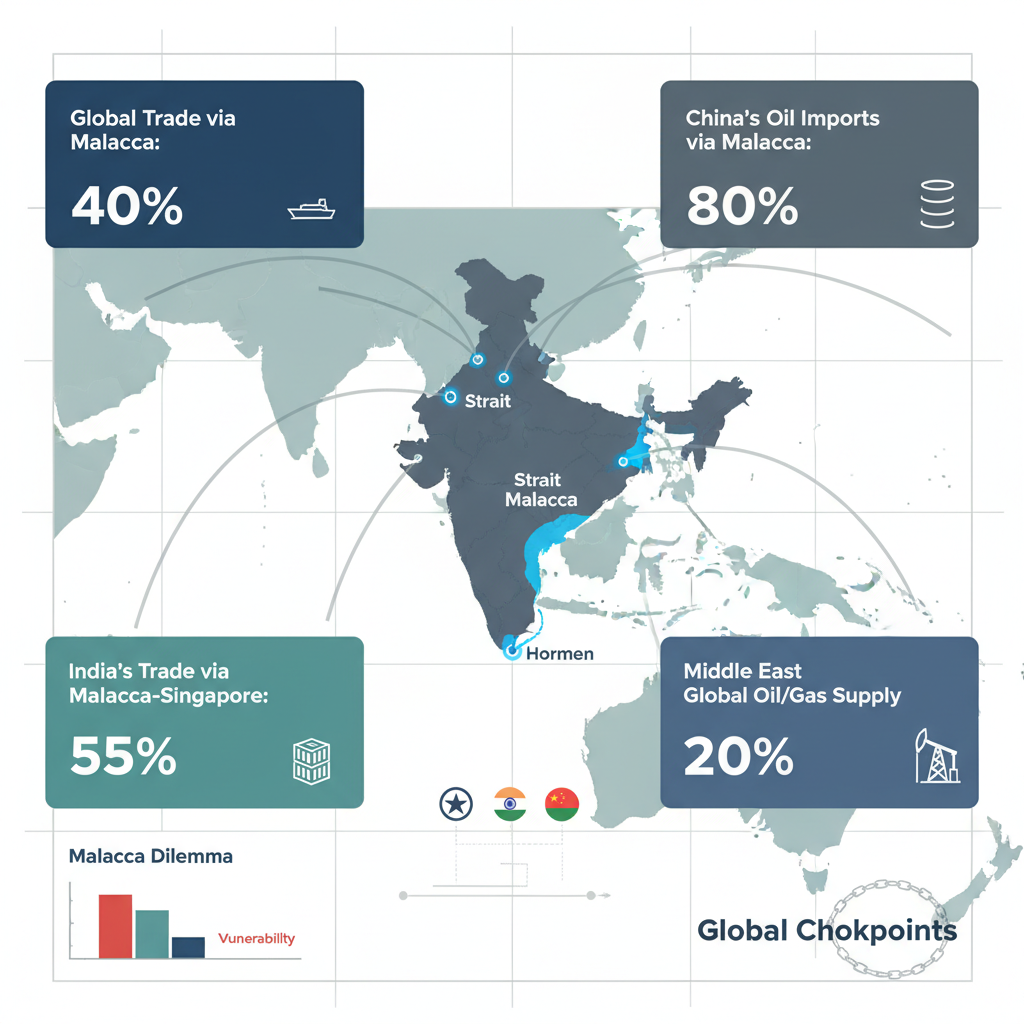
The Strait of Malacca is a 900-km narrow waterway in Southeast Asia. It connects the Indian Ocean and the Pacific Ocean, or the South China Sea. It is a 3 km narrow pathway, which is narrower than that of Hormuz. Situated between the Malay Peninsula and Indonesia, it is one of the world's most important shipping lanes, handling around 40 per cent of global trade and serving as a key route for oil shipments to Asia.
Why is the Strait of Malacca in the news?
The development follows a major defence cooperation agreement signed on April 13 between the US and Indonesia. The pact grants American military aircraft blanket access to Indonesian airspace, significantly enhancing the US military’s ability to monitor and operate near the Strait of Malacca.
Malacca, which lies between Indonesia, Malaysia, and Singapore, is one of the world’s busiest waterway, is responsible for nearly 80 per cent of China’s oil imports. This is the main reason why Beijing called it “Malacca Dilemma.”
Why is the Strait of Malacca critical for India?
According to estimates, nearly 55 per cent of India’s total trade passes through the Malacca-Singapore region. India’s proximity via the Andaman and Nicobar Islands, including INS Baaz air station and the Great Nicobar Project, gives it a significant strategic role if tensions escalate in the area.
Why India should be concerned with US’ big move?
Analysts suggest Trump is laser-focused on securing global maritime chokepoints. The US-Indonesia deal, combined with the Hormuz blockade, signals a broader American effort to control key sea lanes, potentially requiring greater cooperation with India to counter Chinese influence in the Indo-Pacific.
India has been facing energy crisis ever since Iran and the US became involved in the conflict. Although New Delhi has not increased the oil prices, unlike other neighbouring nations, it is facing the burnt of the Middle East crisis as it is responsible for the world’s 20 per cent of oil and gas supply.
You may also like to watch