
- By Kamakshi Bishnoi
- Tue, 14 Apr 2026 11:14 PM (IST)
- Source:JND
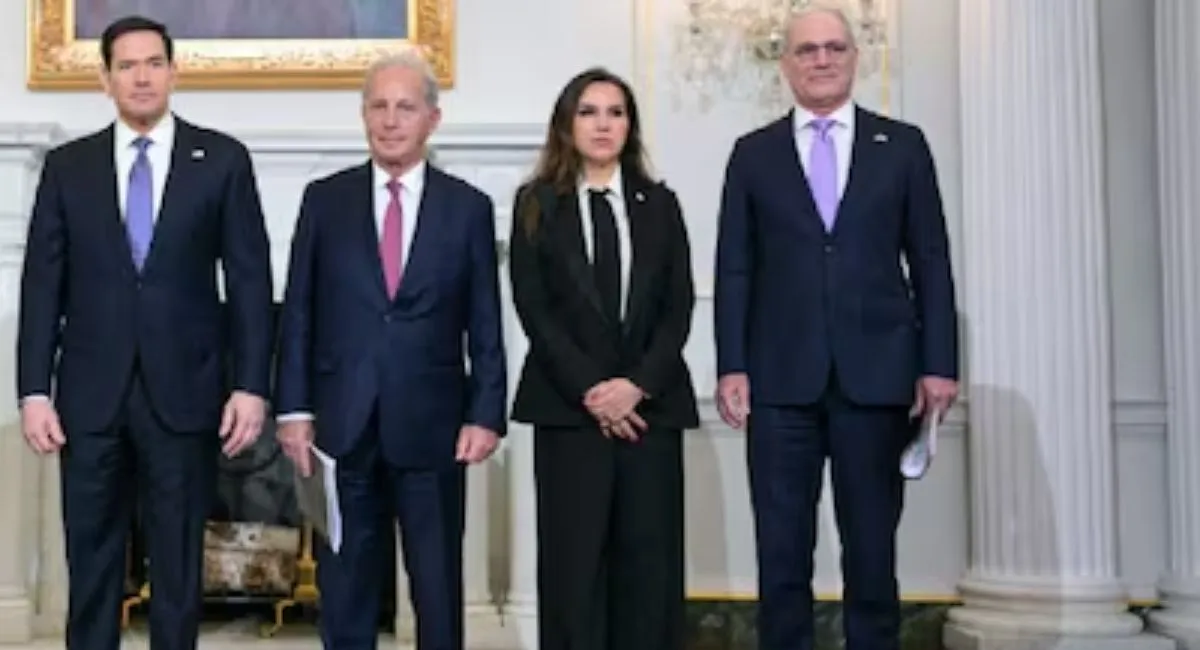
In a significant diplomatic development, Israel and Lebanon held their first direct negotiations for many years in Washington on Tuesday, as another crisis erupts in the Middle East. The United States facilitated the meeting with US Secretary of State Marco Antonio Rubio, Israeli envoy Yechiel Leiter, and Lebanese representative Nada Hamadeh Moawad in what was viewed as an effort to reduce tensions between the two long-time enemies.
Rubio spoke of this meeting as a "historic moment," and expressed the desire to create a framework that would lead to lasting peace between Israel and Lebanon, even though both delegations have agreed that over several decades of animosity will complicate the process.
“This is a historic opportunity. We understand we’re working against decades of history and the complexities that have led us to this unique moment and the opportunity here," Rubio said at the State Department as he welcomed the ambassadors of the two countries.
“The hope today is that we can outline a framework upon which a current and lasting peace can be developed," he added.
Reported Death From The Middle-East Conflict
While talks continue between Israel and Hezbollah, fighting is ongoing. This conflict has caused the deaths of over 2,000 people and has forced over 1 million people from their homes in Lebanon as a result of recent Israeli bombing raids and military operations against them.
President Joseph Aoun of Lebanon hopes to use these talks as a way to “bring about an end to the suffering” throughout his nation - particularly in the southern part of the country, which is currently suffering from conflict.
“I hope that the meeting in Washington will mark the beginning of the end of the suffering of the Lebanese people in general, and those in the south in particular," Aoun said in a statement.
“The only solution lies in the Lebanese army redeploying up to the internationally recognised border, and being solely responsible for security in the area," he said.
Aoun, however, states that until there is a settlement regarding the territorial issues, he believes that the restoration of peace in Lebanon will be elusive without having the Lebanese army be stronger, ie, a more stable army.
There are major differences between both sides in these negotiations, despite the push by diplomatic channels to come to a resolution to this very serious issue. For Israel, to have any resolution, Hezbollah has to disarm completely, while for Lebanon, the first step is to have a ceasefire in place, and negotiations to settle the territorial issues would begin at that point.
In the meantime, the Northern part of Israel continues to be bombed by Hezbollah as both sides engage in dialogue with one another, thus signifying a major division within the people of Lebanon, and causing all parties to have more difficulty in achieving peace between them.
Foreign Ministers From 17 Nations Urge Israel-Lebanon To Seize Opportunity
Additionally, the foreign ministers from 17 nations, including the UK and other countries in Europe, have called on both sides to “seize this opportunity” in order to create and maintain peace, and that both sides must use the opportunity to enter into direct communication in order to establish long-term peace.
Britain's foreign ministry posted the ministers' joint statement saying "direct negotiations can pave the way to bring lasting security for Lebanon and Israel as well as the region".
The statement called "upon all parties to urgently de-escalate and seize the opportunity offered by the ceasefire between the United States and Iran".
While the talks mark a rare diplomatic opening, analysts say that deep-rooted mistrust, ongoing violence, and conflicting demands could make a breakthrough difficult in the near term.
You May Also Like To Watch: