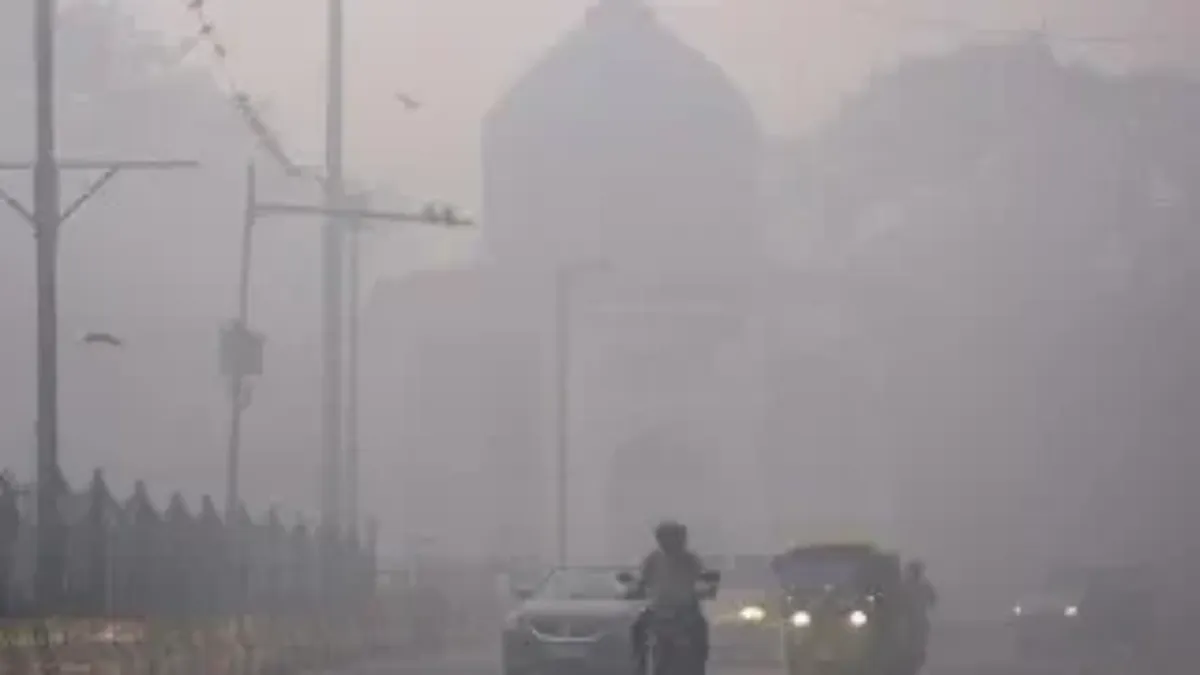
- Delhi's AQI recorded 365, categorized as 'very poor'.
- Rain expected in two days, potentially improving air quality.
- Transport contributed 20.5% to Delhi's Saturday pollution.
Delhi Air Pollution: Rain over the next two days could bring a slight dip in Delhi's pollution levels, with the IMD forecasting a possible improvement in air quality. The Air Quality Early Warning System has also predicted lower PM2.5 and PM10 concentrations over the next 48 hours. For now, however, the capital continues to remain under a blanket of 'very poor' air.
Delhi AQI: How Did Pollution Levels Change?
The Central Pollution Control Board (CPCB) recorded Delhi's current AQI at 365 on Sunday morning. The readings indicate that pollution remained elevated, with the overall air quality in the 'very poor' category on the first day of Arghya in Chhath Puja.
How Many Areas Recorded Severe AQI?
Of the 59 monitoring stations that reported data, 17 registered readings in the 'severe' category on Saturday. A further 38 stations recorded 'very poor' air quality. Three stations were classified as 'poor', while just one managed to record a 'moderate' reading. However, on Sunday, only eight areas remained in severe category.
Recommended For You
The station-wise figures show that cleaner air remained limited to very few locations, while most parts of Delhi continued to face high pollution.
Which Source Contributed Most To Delhi's Pollution?
Transport accounted for the largest share of Delhi's pollution on Saturday, contributing 20.5%, according to the Decision Support System. PM10 was identified as the dominant pollutant in the capital.
The forecast rainfall could help settle airborne pollutants and lower particulate matter concentrations. However, the actual impact on the city's AQI will depend on the intensity of rainfall and subsequent weather conditions.
ALSO READ: Delhi's Air Quality Worsens With AQI 321 In 'Very Poor' Category Ahead Of Chhath Puja
Delhi AQI: Key Figures From Saturday
Average AQI: 383
Previous day's AQI: 39
Severe category monitoring stations: 17
Very poor category stations: 38
Poor category stations: 3
Moderate category stations: 1
Dominant pollutant: PM10
Transport sector contribution: 20.5%